
Social Listening vs Social Prospecting: The Difference Between Watching Conversations and Finding Real Buyers
Most founders do not lose social leads because nobody is talking about their problem.
They lose them because they do not know what kind of conversation they are looking at.
One Reddit thread might be a customer pain signal. Another might be a competitor complaint. Another might be someone asking for tool recommendations with real buying intent. If you treat all three the same, your reply either comes too late, sounds too promotional, or misses the actual opportunity.
That is where the difference between social listening and social prospecting matters.
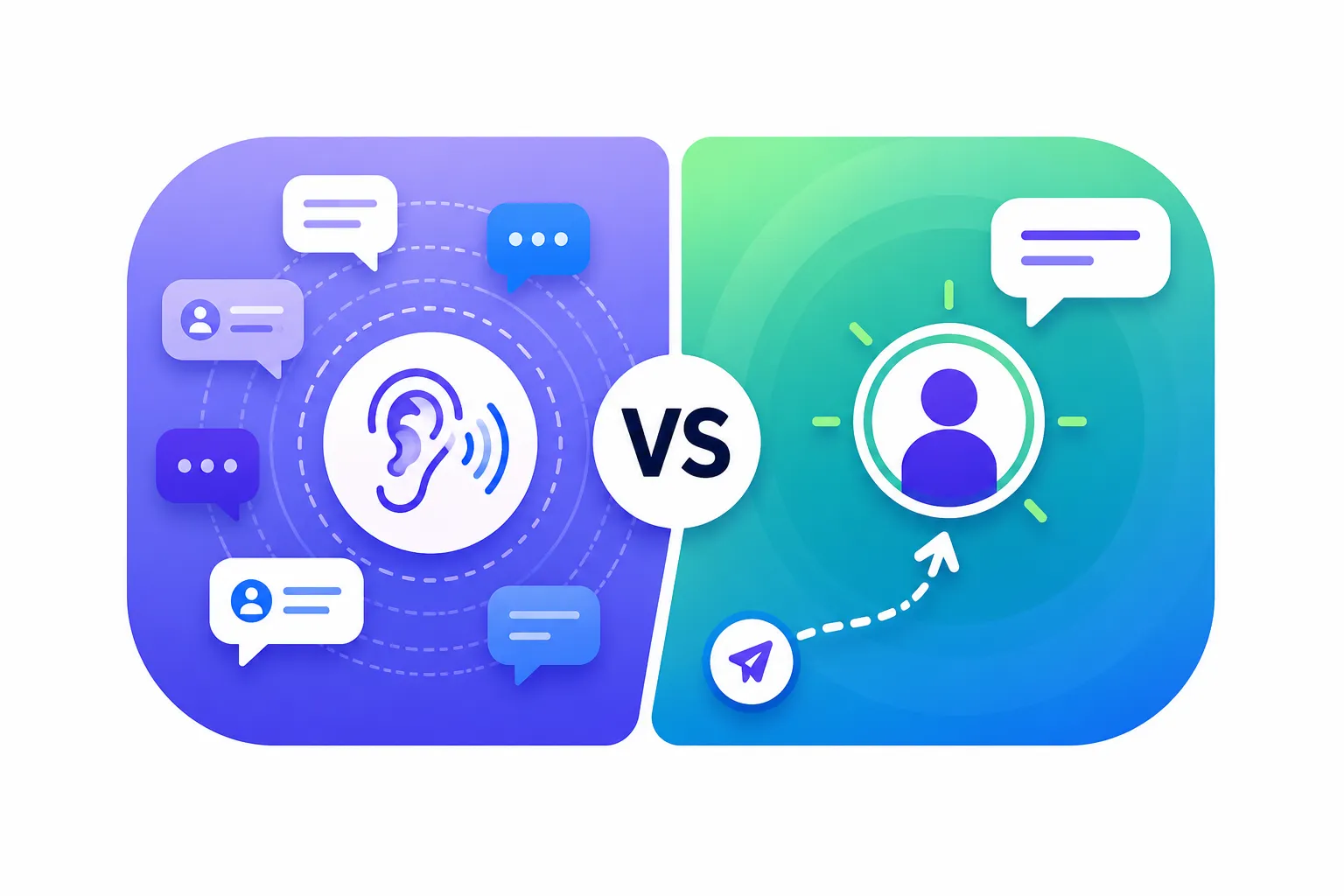
Social listening helps you understand what people are saying. Social prospecting helps you decide which conversations are worth entering. Both are useful, but they are not the same job.
In this article, you will learn the practical difference between them, when to use each one, how to avoid sounding like spam, and how to build a workflow that turns public conversations into real pipeline.
#The Problem: Most Teams Monitor Conversations Without Knowing What to Do Next
A lot of founders start with a simple idea:
“I should track Reddit, X, and other communities where my customers hang out.”
That is a good instinct.
But then the workflow gets messy.
You search your product category. You check a few subreddits. You save some keywords. You maybe set alerts for your brand name or competitor names. Some days you find interesting conversations. Other days you miss everything. When you do find a good thread, you are not sure whether to reply, observe, save it, or turn it into outreach.
So the process becomes random.
You are technically “listening,” but not really building a lead channel.
This creates a hidden cost. High-intent conversations usually have a short window. If someone asks, “What tool should I use for this?” and five helpful people answer before you even see it, the best moment is already gone.
That is why social monitoring alone is not enough.
You need to know whether your goal is learning, protecting your brand, spotting pain, or finding buyers.
#Social Listening Is About Understanding the Market
Social listening is the broader activity.
It means watching public conversations to understand what people are saying about a topic, brand, product, competitor, or problem.
Think of it like sitting in the back of the room with a notebook.
You are not always trying to sell. You are trying to notice patterns.
For example, social listening can help you answer questions like:
-
What problems keep showing up in customer conversations?
-
What language do buyers use when describing their pain?
-
Which competitors are being compared often?
-
What objections do people repeat?
-
What features do people ask for?
-
Where does your category feel confusing?
This is extremely useful for product positioning, content ideas, sales messaging, customer research, and reputation management.
But social listening does not automatically mean you have found a lead.
A person saying “I hate how complicated CRM tools are” is useful market insight.
A person saying “We need a simple CRM for a 5-person sales team, any recommendations?” is much closer to a prospecting opportunity.
That difference matters.
#Social Prospecting Is About Finding Conversations You Can Act On
Social prospecting is more focused.
It means finding public conversations where there is enough buyer intent, context, and timing to justify a helpful response.
The keyword is actionable.
You are not just collecting mentions. You are asking:
“Is this a conversation where we can genuinely help?”
That might include someone:
-
asking for product recommendations
-
complaining about a competitor
-
describing a painful workflow problem
-
comparing options before buying
-
asking how to solve a problem your product solves
-
looking for an agency, consultant, or tool
-
showing urgency around a business issue
Social prospecting is not about jumping into every thread with a pitch.
That is how brands damage trust.
Good prospecting feels more like useful participation. You enter the conversation because the person has a real problem and your answer can move them forward.
#The Simple Difference
Here is the cleanest way to separate them:
QuestionSocial ListeningSocial ProspectingMain goalUnderstand the marketFind possible buyersBest useResearch, messaging, reputation, product insightLead discovery, sales conversations, pipelineType of signalMentions, opinions, pain points, trendsBuying intent, urgency, tool search, competitor frustrationReply needed?Not alwaysOften, but only if helpfulSuccess metricBetter insightBetter conversations and qualified leadsRisk if done badlyToo much noiseSpammy replies and low trustBest mindset“What are people saying?”“Who needs help right now?”Both are valuable.
But they should not be measured the same way.
If you use social listening for sales, you may drown in weak signals. If you use social prospecting for research, you may ignore useful market patterns because they are not immediately convertible.
#Why the Difference Matters for Pipeline
Imagine two Reddit posts.
First post:
“I tried three project management tools and still feel like they all overcomplicate simple client work.”
Second post:
“What is the best simple project management tool for a small agency? We need something this week.”
Both are useful.
But they require different actions.
The first one is a listening signal. It tells you the market may be tired of bloated tools. You could use that insight in positioning, content, or product messaging.
The second one is a prospecting signal. The person has a clear need, a use case, and urgency. A helpful reply could turn into a demo, trial, or conversation.
If you treat the first one like a sales lead, you may sound pushy.
If you treat the second one like passive research, you may miss a buyer.
That is the real difference.
Social listening tells you what the market cares about.
Social prospecting tells you where to show up.
#Bad Social Prospecting Looks Like Spam
The reason many founders avoid social selling is simple:
They have seen it done badly.
Bad social prospecting looks like this:
“Hey, we built exactly this. Check us out.”
That kind of reply usually fails because it skips trust.
The person did not ask for your pitch. They asked for help, context, recommendations, tradeoffs, or proof that you understand their problem.
Better social prospecting looks more like this:
“For a small agency, I would avoid tools that require too much setup. You probably want something lightweight, easy for clients to understand, and flexible enough for recurring work. The main thing I’d check is whether your team needs internal task depth or simple client visibility first.”
Then, if relevant, you can add a soft product mention.
The order matters.
Help first. Product second.
#A Better Mental Model: Listen Wide, Prospect Narrow
The easiest way to use both correctly is this:
Listen wide. Prospect narrow.
Listening wide means you track a broad set of conversations so you understand the market.
Prospecting narrow means you only reply when there is strong enough fit.
This keeps you from two common mistakes.
The first mistake is being too passive. You collect insights but never turn them into action.
The second mistake is being too aggressive. You reply to everything and start sounding like a brand account nobody trusts.
A good workflow sits in the middle.
You monitor enough to see the market clearly, but you only engage when the conversation deserves it.
#What Counts as a Strong Prospecting Signal?
Not every mention is worth your time.
A strong social prospecting signal usually has at least three of these:
-
The person describes a specific problem
-
They are asking for a recommendation
-
They mention a current tool is not working
-
They show urgency
-
They describe their business context
-
They compare options
-
They ask how others solved the same issue
-
They mention budget, team size, workflow, or use case
-
The thread is still active enough for a reply to matter
Here is a practical scoring table you can use.
SignalWeak VersionStrong VersionPain“This is annoying”“This is blocking our sales team every week”Intent“Any thoughts?”“What tool should we switch to?”TimingOld thread with no activityFresh thread with active repliesFitBroad complaintProblem your product directly solvesContextVague commentMentions team size, workflow, budget, or goalReply angleProduct pitch onlyHelpful advice plus optional product mentionThis is where tools like Leadmatically fit naturally. The hard part is not just finding mentions. It is finding the right conversations early enough and keeping the reply tied to the actual context.
For a practical example of this workflow, you can also read the guide on how to use an AI tool to monitor Reddit for sales opportunities without sounding like spam.
#How to Use Social Listening Properly
Social listening is best when you are trying to improve your understanding of the buyer.
Use it to collect patterns, not just individual posts.
#Track pain language
Pay attention to the exact words people use.
Do they say “too expensive,” “too complex,” “hard to set up,” “not worth it,” “support is slow,” or “I do not know where to start”?
That language is useful because it shows how customers actually think.
You can use it in landing pages, blog topics, ads, onboarding, and sales replies.
#Track competitor frustration
Competitor mentions are not always leads.
Sometimes they are just opinions.
But repeated frustration tells you where the market is disappointed.
For example, if people keep saying a competitor is powerful but too hard to use, that gives you a positioning angle. You can explain why your product is simpler, faster, or more focused.
#Track unanswered questions
Unanswered questions are content gold.
If people keep asking the same thing in communities, that means existing content is not solving it clearly.
A good listening workflow can feed your blog calendar, help docs, comparison pages, and product education.
#How to Use Social Prospecting Properly
Social prospecting needs more discipline.
You are entering someone else’s conversation, so your reply has to earn its place.
#Start with the problem, not your product
Before mentioning your tool, answer the actual question.
If someone asks for a recommendation, explain the decision criteria first.
If someone complains about a workflow, explain what usually causes that pain.
If someone is comparing tools, explain the tradeoffs honestly.
The goal is to make your reply useful even if they never click your link.
That is how you build trust.
#Match the tone of the thread
A technical subreddit does not want a polished marketing reply.
A founder community may appreciate a direct operator-style answer.
A casual thread may need a shorter, more human response.
Tone mismatch is one of the fastest ways to look automated.
Read the room before replying.
#Do not force a lead where there is no lead
Some conversations are better saved as research.
If the person is only venting, do not push.
If the thread is old, do not revive it with a salesy comment.
If the problem is not a real fit, move on.
Good prospecting is selective.
#A Practical Workflow for Both
Here is a simple workflow you can use without making things complicated.
#Step 1: Build your listening map
Start with categories, not just keywords.
Track:
-
your brand name
-
competitor names
-
product category terms
-
problem phrases
-
“alternative to” phrases
-
buying questions
-
use case phrases
-
pain terms your customers often use
For Leadmatically, this is handled through businesses and keywords, so each business has its own targeting layer instead of one messy pile of alerts.
#Step 2: Separate insight from intent
When a conversation appears, label it mentally:
-
Is this research?
-
Is this a brand/reputation issue?
-
Is this content inspiration?
-
Is this a possible lead?
-
Is this a strong buying signal?
This one step improves everything.
It stops you from replying to weak conversations and ignoring strong ones.
#Step 3: Prioritize fresh, specific, high-fit threads
The best opportunities usually have three things:
-
They are recent
-
They are specific
-
They match your product or service clearly
A vague old thread is usually not worth the same attention as a fresh post from someone actively looking for a solution.
#Step 4: Write replies like a helpful operator
A good reply usually follows this structure:
-
Acknowledge the problem
-
Give practical advice
-
Explain the tradeoff
-
Mention your product only if it truly fits
-
Keep the CTA soft
For example:
“If your main issue is finding relevant Reddit conversations before they go cold, I would separate monitoring from replying. First, track the keywords and competitor mentions that show buying intent. Then only reply when the thread has a real problem you can help with. Tools like Leadmatically can help with that discovery and reply workflow, but the bigger point is to avoid treating every mention like a sales lead.”
That feels different from a pitch.
It teaches first.
#Where Leadmatically Helps
The manual version of this workflow works for a while.
Then it breaks.
You forget to check Reddit. You miss threads. You search too broadly. You reply late. You save links in random places. You cannot tell which keywords are producing useful conversations. You spend too much time looking and not enough time responding well.
Leadmatically is built for that gap.
It helps businesses monitor Reddit and X, find relevant conversations, organize discovered leads, and support better replies. Instead of manually hunting through social platforms every day, you can build a repeatable workflow around businesses, keywords, lead queues, AI scoring, and reply prompts.
That does not mean every conversation becomes a lead.
It means the right conversations are easier to catch, review, and respond to before the window closes.
#Quick Checklist: Is This Listening or Prospecting?
Use this before you reply.
QuestionIf YesActionIs the person asking for a recommendation?ProspectingReply with criteria and a soft suggestionAre they only sharing an opinion?ListeningSave as insightAre they complaining about a competitor?Maybe prospectingCheck urgency and fitIs the thread fresh?Stronger opportunityPrioritize reviewIs your product directly relevant?Possible leadReply carefullyWould your reply help without a link?Good signPost itAre you forcing the connection?Bad signDo not replyThe last question is the most important.
If your reply only makes sense because you want to promote yourself, skip it.
#Common Mistakes to Avoid
#Mistake 1: Tracking only your brand name
Brand monitoring is useful, but it is too narrow for growth.
Most buyers will not mention your product. They will describe the problem instead.
Track pain, use cases, alternatives, and competitor frustration too.
#Mistake 2: Treating every mention as a lead
A mention is not a lead.
A complaint is not always a lead.
A conversation becomes a prospecting opportunity when there is enough context, timing, and fit.
#Mistake 3: Replying like a landing page
Community replies should not sound like website copy.
Avoid phrases like “our innovative platform helps businesses streamline…”
Nobody talks like that in a Reddit thread.
Say the useful thing plainly.
#Mistake 4: Waiting too long
Timing matters.
A helpful reply posted early can shape the thread.
A similar reply posted three days later may be invisible.
That is why consistent monitoring matters more than random manual searching.
#Mistake 5: Measuring only clicks
Clicks are not the only value.
A good social workflow can also improve positioning, content ideas, objection handling, competitor awareness, and sales language.
Measure pipeline, but do not ignore learning.
#FAQ
#Is social listening the same as lead generation?
No. Social listening helps you understand conversations. Lead generation starts when you identify people or businesses with enough intent, fit, and timing to justify action.
#Should I reply to every Reddit mention of my category?
No. That usually leads to weak replies and low trust. Reply when the conversation is specific, fresh, relevant, and your answer can genuinely help.
#Can social listening still help sales?
Yes. It improves sales by showing you how buyers talk, what they dislike, what they compare, and which problems keep repeating. But it is not the same as prospecting.
#What makes social prospecting work?
Good targeting, fast discovery, useful replies, and restraint. The goal is not to post more. The goal is to show up in the right conversations with the right context.
#Where does Leadmatically fit?
Leadmatically fits when you want a repeatable way to monitor Reddit and X, find relevant conversations, review lead opportunities, and reply with better timing and context.
#Final Thought
Social listening and social prospecting are connected, but they are not interchangeable.
Listening helps you understand the market.
Prospecting helps you act when the right buyer signal appears.
The best teams use both. They listen widely enough to understand what people care about, then prospect carefully enough to avoid sounding like spam.
That is the real advantage.
Not louder outreach.
Better timing, better context, and more useful replies.