
Why Faster, Better-Timed Replies Beat More Social Leads in Social Lead Generation
Most social lead generation fails before the reply is even written.
Not because the offer is bad. Not because the founder is lazy. Not because Reddit, X, or social communities “do not work.” It fails because the reply shows up after the useful moment has already passed.
A buyer asks for advice. A few people answer. Someone recommends a competitor. The thread gets attention. The buyer forms an opinion. Then your team finds it two days later and drops a polished reply that technically says the right thing but feels late, forced, and disconnected.
That is the real problem.
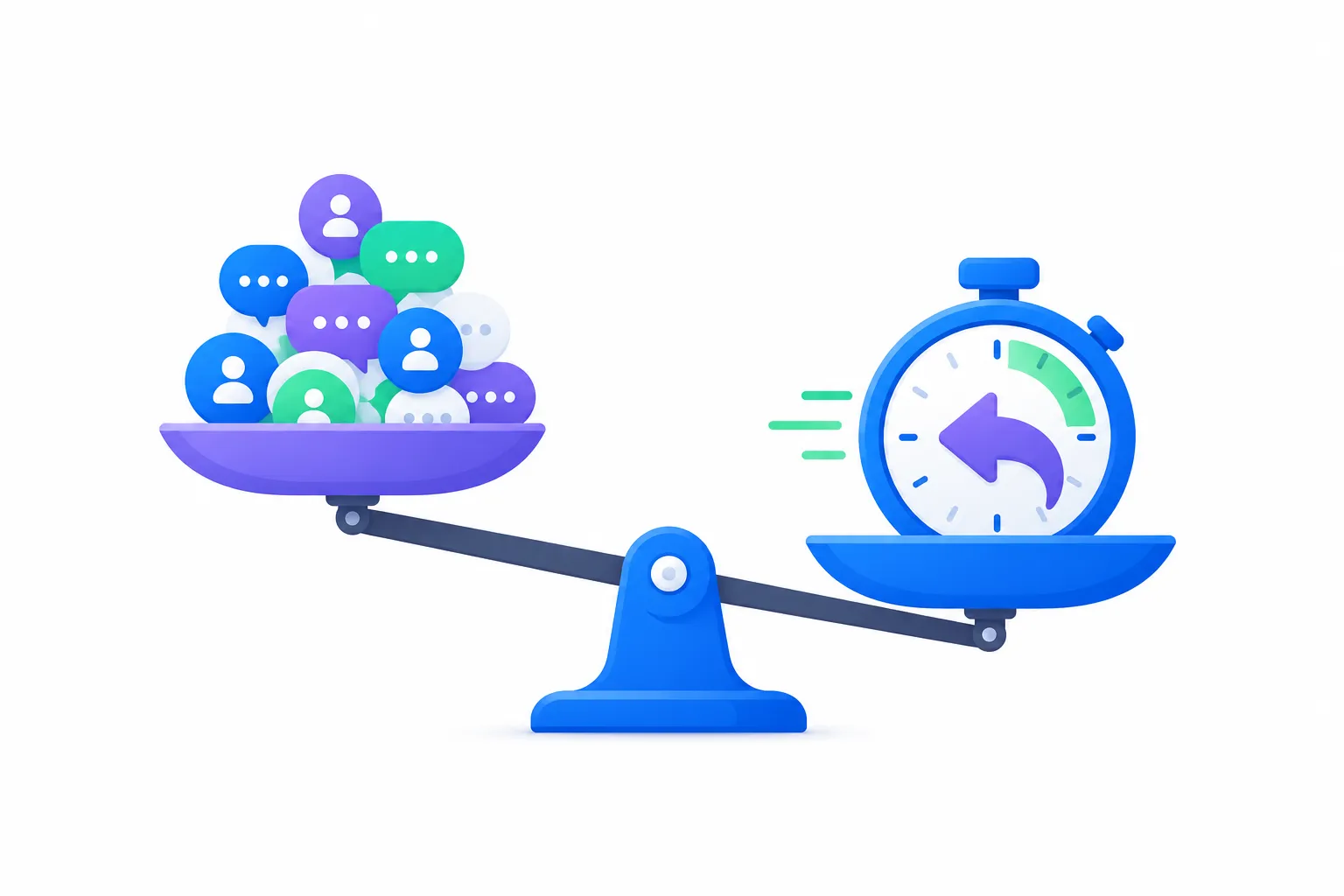
Social lead generation is not won by collecting the highest number of mentions, alerts, comments, or keywords. Volume helps only when you can act on the right conversations at the right time. A smaller number of high-intent conversations, found early and handled well, will usually beat a huge pile of stale leads.
In this article, you will learn why timing matters more than volume, how to spot the conversations worth acting on, and how to build a workflow that turns social conversations into pipeline without sounding spammy.
#More Leads Does Not Mean More Buyers
It is easy to confuse activity with progress.
You can monitor 100 keywords, scrape thousands of posts, and build a dashboard full of “opportunities.” But if most of those conversations are old, vague, low-intent, or already solved, the volume becomes noise.
This is where many founders get stuck.
They think the answer is:
“Find more Reddit threads.”
“Track more keywords.”
“Reply to more people.”
“Cover more communities.”
Sometimes that helps. But only after the timing problem is fixed.
Imagine two scenarios.
In the first one, you find 200 social mentions from last week. Some are relevant. A few are interesting. But most buyers have already made a decision, received recommendations, or stopped checking the thread.
In the second one, you find 12 conversations from the last few hours where people are actively asking for help, comparing tools, complaining about a painful workflow, or looking for alternatives.
The second list is smaller.
It is also far more valuable.
#Timing Changes the Entire Meaning of a Reply
The same reply can feel helpful or annoying depending on when it arrives.
Early in a thread, the buyer is still open. They are explaining the problem, comparing options, asking follow-up questions, and paying attention to useful answers.
Late in a thread, the buyer may already be done. They may have chosen a tool, received five recommendations, or stopped caring.
That means timing affects more than visibility. It affects trust.
#Early Replies Feel Like Help
When you show up early with a useful answer, you look like someone who understands the problem.
You can ask a smart question. You can explain a tradeoff. You can point out a mistake the buyer may not have considered. You can recommend a next step without making the whole reply about your product.
That feels natural.
#Late Replies Feel Like Outreach
When you show up late, even a good reply can feel like marketing.
The thread already moved on. The buyer may not be active anymore. Other people may have already shaped the conversation. Your answer looks less like help and more like someone searching for keywords and trying to squeeze into the discussion.
That is why timing matters.
Not because speed is everything, but because the best replies happen while the conversation is still alive.
#The Real Goal Is Not More Conversations. It Is Better Windows.
A good social lead workflow should not ask:
“How many leads did we find?”
It should ask:
“How many useful buying windows did we catch while they were still open?”
That is a different game.
A buying window is the short period where the buyer is still paying attention and has not fully decided what to do. In that window, your reply has a real chance to influence the next step.
You are not trying to interrupt someone.
You are trying to enter a conversation at the moment when help is still welcome.
That is why raw lead volume can be misleading. A dashboard might show 500 mentions, but if only 10 are fresh, specific, and tied to real pain, those 10 deserve more attention than the other 490.
#What Good Timing Looks Like in Social Lead Generation
Good timing is not just “reply fast.”
Fast spam is still spam.
Good timing means you find the right conversation early enough to add value, but you still take the time to understand the context before replying.
Here is the simple breakdown.
SignalWeak VersionStrong VersionWhat You Should DoRecencyThread is several days oldThread is active today or still getting repliesPrioritize it quicklyIntentPerson mentions a broad topicPerson describes a specific problem or asks for toolsTreat it as a real opportunityContextYou only saw a keyword matchYou understand the pain, use case, and toneWrite a reply that fitsCompetitionMany tools already recommendedFew useful replies yetAdd a helpful answer earlyBuyer energyNo follow-up activityBuyer is answering comments or clarifying needsEngage while they are activeThis is the difference between chasing mentions and finding moments.
#Why Volume-First Social Lead Gen Breaks Down
Volume feels safe because it is measurable.
You can say, “We found 1,000 mentions this month.”
But what does that actually mean?
If those mentions are too broad, too old, or too far away from buying intent, they do not help pipeline. They just create work.
A volume-first workflow usually creates three problems.
#1. Your Team Replies Too Late
Manual searching is slow. Someone checks Reddit in the morning, searches a few keywords, opens a few tabs, saves a few links, and maybe replies later.
By then, the strongest moment may already be gone.
Social conversations move quickly because attention is temporary. The person asking for help may only be active for a few hours. If your workflow finds the thread after that, your reply is already weaker.
#2. Your Replies Become Generic
When there are too many leads, people rush.
They skim the post, copy a template, change a few words, and send it.
That is how replies start sounding like marketing.
The buyer asked a specific question, but the reply answers a broad category. The thread has a certain tone, but the reply sounds like a landing page. The user wants advice, but the reply jumps straight to a product.
More volume often creates worse replies.
#3. You Attract the Wrong People
Broad targeting brings broad attention.
If you track generic keywords like “marketing,” “CRM,” “sales,” “automation,” or “leads,” you will find a lot of conversations. But many of them will not match your product, price point, market, or timing.
That creates a messy pipeline.
You start replying to people who are not ready, not qualified, or not actually looking for what you sell. Then social lead generation starts to feel like random outreach instead of a repeatable channel.
#The Better Approach: Fewer Leads, Higher Intent, Faster Action
A better workflow is not about doing less.
It is about filtering harder.
You want to catch conversations where three things are true:
-
The person has a real problem.
-
The conversation is still active.
-
Your reply can genuinely help.
That is the core of timing-first social lead generation.
You are not trying to be everywhere. You are trying to be present in the few places where your answer can change the outcome.
For example, a SaaS founder selling a Reddit monitoring tool should care less about every mention of “social listening” and more about threads like:
-
“How do you find Reddit posts where people mention competitors?”
-
“Is there a tool that alerts me when someone asks for alternatives?”
-
“We keep finding customer pain points too late. How do you monitor this?”
-
“What is the best way to get leads from Reddit without spamming?”
Those are not just keywords.
Those are buying signals.
#A Simple Timing-First Workflow
Here is a practical workflow you can use.
#Step 1: Track Pain, Not Just Keywords
Do not only track product category terms.
Track the language people use when the problem is painful.
Instead of only tracking:
-
social listening tool
-
Reddit marketing
-
lead generation software
Also track phrases like:
-
how do I find people asking for alternatives
-
customers complaining about competitors
-
where do SaaS buyers ask for recommendations
-
Reddit threads about switching tools
-
how to monitor Reddit for leads
The closer your tracking is to real buyer language, the better your timing gets.
#Step 2: Score Conversations by Urgency
Every mention should not get the same attention.
A fresh thread where someone asks for recommendations should rank higher than an old comment casually mentioning your industry.
Use a simple priority score:
-
High priority: fresh, specific, problem-driven, buyer asking for help
-
Medium priority: relevant discussion, some pain, but unclear buying intent
-
Low priority: broad mention, old thread, no clear problem
This keeps you from wasting your best energy on weak conversations.
#Step 3: Reply Based on Context
Do not lead with your product.
Lead with the problem.
A good reply should feel like it belongs in the thread. That means you should match the buyer’s language, answer the actual question, and only mention your product if it naturally helps.
Bad reply:
“Check out our tool. It helps with Reddit lead generation.”
Better reply:
“The tricky part is not finding more Reddit threads. It is catching the right ones before the buyer already gets five recommendations. I would track problem phrases and competitor mentions separately, then prioritize fresh threads where the person is asking for advice. Tools like Leadmatically can help here because they monitor Reddit and X for relevant conversations and give you a cleaner queue to act on.”
The second reply teaches first.
That is why it works better.
#Step 4: Build a Daily Lead Review Habit
Timing does not improve if nobody checks the queue.
Set a simple daily rhythm:
-
Review fresh high-intent conversations first.
-
Ignore low-quality matches unless they show clear pain.
-
Reply only when you can add something useful.
-
Mark conversations as read, replied, or not worth pursuing.
-
Look back weekly to see which keywords produced real opportunities.
This turns social lead generation from random searching into a repeatable system.
For a deeper setup workflow, you can also connect this idea with a practical guide like Leadmatically setup from zero to first qualified lead.
#Where Leadmatically Fits Into This Workflow
Leadmatically is useful because the hardest part of social lead generation is not writing one good reply.
The hard part is consistently finding the right conversations early enough.
That is where manual workflows break.
You can search Reddit yourself. You can check X manually. You can save links in a spreadsheet. That may work for a few days. But it is hard to do every day while also running a business, serving customers, shipping product, and managing sales.
Leadmatically helps by monitoring Reddit and X, finding discussions relevant to your business, and giving you a lead queue you can actually work through. You can reply yourself using suggested replies, or use the done-for-you reply workflow where Leadmatically replies with human-crafted responses through its own established Reddit accounts.
The advantage is not “more automation.”
The advantage is better timing, cleaner discovery, and more context before you reply.
#A Practical Checklist Before You Reply
Before responding to a social lead, ask these questions:
-
Is the thread still active?
-
Is the person asking for help, advice, alternatives, or recommendations?
-
Do I understand the exact problem?
-
Can I say something useful without immediately pitching?
-
Has someone already answered the question well?
-
Would my reply still make sense if I removed my product mention?
-
Is this person likely to care about what we offer?
That last question matters.
Not every relevant conversation deserves a reply. Sometimes the best move is to skip it. A disciplined social lead workflow protects your brand as much as it creates pipeline.
#What to Measure Instead of Raw Lead Volume
If you only measure volume, you will optimize for the wrong thing.
Track these instead:
#Fresh High-Intent Leads
How many strong conversations did you find while they were still active?
This tells you whether your monitoring is working.
#Reply Quality
How many replies were actually useful, specific, and context-aware?
This tells you whether your team is helping or just posting.
#Response Window
How long did it take between the conversation appearing and your reply?
This tells you whether timing is improving.
#Conversation Outcomes
Did the person respond? Did they ask a follow-up? Did they visit your site? Did they book a call? Did they mention your product later?
This tells you whether the channel is producing real movement.
Volume is not useless. It just should not be the main scoreboard.
#FAQ
#Is social lead generation just replying faster than competitors?
No. Speed helps, but only if the reply is useful. A fast generic reply can damage trust. The goal is to find the right conversation early and respond with context.
#Should I reply to every relevant Reddit or X mention?
No. Reply when the conversation has real intent and your answer can help. If the thread is too old, too broad, or not related to a real problem, skip it.
#How do I know if a social lead is high intent?
Look for specific pain, tool comparisons, competitor frustration, recommendation requests, buying questions, or urgent workflow problems. A person asking “what should I use for this?” is much more valuable than someone casually mentioning your category.
#Does automation make social replies sound spammy?
It can if you use automation to blast generic replies. It works better when automation handles monitoring and filtering, while the reply still matches the context and sounds human.
#Why use Leadmatically instead of manually searching Reddit?
Manual searching is inconsistent. Leadmatically helps monitor relevant conversations, surface better-fit opportunities, and support reply workflows so you can act before the best window closes.
#Final Thought
Social lead generation is not a numbers game first.
It is a timing and trust game.
You do not need to reply to every mention. You need to find the right conversations while buyers are still paying attention, understand the context, and say something useful before asking for anything.
That is how Reddit, X, and public social conversations become a real acquisition channel instead of another noisy task list.
Leadmatically fits that workflow because it helps you catch the moments that are easy to miss manually: fresh conversations, clear buying signals, and chances to reply before the thread goes cold.